
You've spent years being very good at work
that's slowly stopped feeling like yours
Not because you've lost your skills. Not because you've stopped caring. But because you've been performing a version of yourself - adapting, adjusting, modulating - for long enough that you've lost reliable access to the way you actually work best.
That's not a personal failing. That's what happens to introverted professionals who've spent a decade or more inside workplaces designed for extroverts.
And at some point - usually after a period that looked fine from the outside - the cost of that becomes impossible to ignore.
What the cost actually looks like
It's rarely a single moment. It's more like an accumulation. You come home emptied out - not just tired, but genuinely depleted in a way that sleep doesn't fully fix. You're physically present in the evenings but mentally elsewhere, still processing the day, still running a quiet audit of everything you said and didn't say.
At work, you've probably stopped speaking up in certain situations - not because you have nothing to contribute, but because the timing and the format are never quite right for how you think. Your best ideas arrive after the meeting. Your most careful analysis happens in writing, alone, with time to think. But the people who get recognised are the ones who take up space in the room.
And underneath all of it, something that's harder to name: a low, persistent sense that the version of your career you've been working towards hasn't quite arrived. Or that it arrived and doesn't fit the way you expected it to.
When burnout isn't the whole story
A lot of introverted professionals arrive at a point that looks like burnout - and it may well be. But burnout is often the end result of something that started much earlier: years of sustained adaptation to a working style that doesn't fit, combined with the specific drain of performing extroversion in an environment that rewards it.
Research on introversion shows that introverted brains process information more deeply, have higher baseline neural activity, and respond differently to dopamine than extroverted ones. The fatigue of a day of back-to-back meetings, open-plan noise, and rapid-fire decisions is not the same fatigue for you as it is for your extroverted colleagues. It's not a character weakness. It's neurological. And ignoring it for years has a cumulative effect.
Addressing only the burnout - without addressing what produced it - means recovering and returning to the same system unchanged. That's why so many people find that standard burnout interventions don't hold.
The part that usually doesn't get named
In my work with introverted professionals, there's a layer that almost never comes up in standard coaching or career conversations. It's grief.
Not grief in the conventional sense. But something real and nameable: the loss of a professional self you've slowly moved away from. The gap between the career you invested in and what it's actually delivered. The time already spent, and the fear that more time will pass before something changes. The gradual erosion of knowing what kind of work actually suits you, because you've been so focused on adapting to what was required.
None of this gets called grief in most professional development contexts. But it has the structure of grief - it has its own logic, its own stages, and its own specific kind of heaviness. And it doesn't resolve by pushing through or setting better goals.
I'm a certified grief therapist as well as a coach. That combination - training in grief and loss, applied to professional identity and career - is what makes this work different from standard coaching. I know how to name what's there. And I know what to do with it once it's named.
What we work on together
I'm an introvert myself. I've done the adapting, and I know what it costs. My work with clients is structured, evidence-based, and direct - not because directness is a style, but because the people I work with are intelligent professionals who don't need to be talked around. They need things named clearly and examined carefully.
Depending on where you are, we typically work on some combination of the following:
• Understanding what's actually driving the depletion - and separating introversion, burnout, and identity loss from each other.
• Recovering access to your own working style and strengths after years of overadaptation.
• Assertiveness and visibility - getting recognised for the work you do without having to perform in ways that cost you.
• Professional identity and self-worth - especially where repeated invisibility has started to settle in as a belief about your own value.
• Grief work around career and professional self - naming what's been lost, and what that means for what comes next.
• Leadership coaching for introverted leaders and those moving into leadership roles.
• Career direction - not as a logistics exercise, but as an honest examination of what you've actually valued, what your body and mind have been signalling, and what a sustainable working life might look like for you specifically.
Everything is grounded in documented research and tested methods. That's not a marketing claim - it's a reflection of what the people I work with actually need before they'll invest in anything.
Who I typically work with
Most of my clients are highly educated professionals - researchers, leaders, HR professionals - roughly ten to twenty years into their careers.
They're introverted, they hold themselves to high standards, and they've been successful by most external measures. They're not struggling with basic competence or motivation. They're struggling with something more specific: the accumulated cost of a working life that hasn't quite fit, and not knowing what to do with that.
Some of them are also carrying a question about whether their current role or field is still right for them - not as a logistics question, but as something deeper that hasn't been properly examined yet. That dimension of the work is available too, when it's relevant.
Frequently asked questions
It's coaching, informed by training in grief work. I don't diagnose or treat mental health conditions. But I do work at a depth that standard coaching often doesn't reach - and my grief training means I can work with loss, identity, and meaning in a way that's clinically grounded rather than just motivational.
No. That uncertainty is actually a very common starting point. Part of the work is developing a clearer picture of what's actually going on - and that often takes more than one conversation to properly identify. You don't need to arrive with a diagnosis.
Yes. Research suggests introverted leaders are often stronger at listening, delegating, and creating psychological safety - particularly in skilled, self-motivated teams. The challenge isn't ability. It's stopping the comparison to a leadership style that was never yours to begin with.
Yes. All sessions are conducted online and in English. I'm based in Denmark but work with clients across Europe, North America, and beyond.
We discuss that in the initial conversation, which is free and without obligation. There are no fixed packages - the programme is shaped around what you actually need.
If something here sounds familiar
You're welcome to book a free introductory conversation. We'll talk about where you are, what you're dealing with, and whether working together makes sense. No obligation. No sales pitch.
If you're not ready for that yet, that's fine too. The work tends to start when someone is.
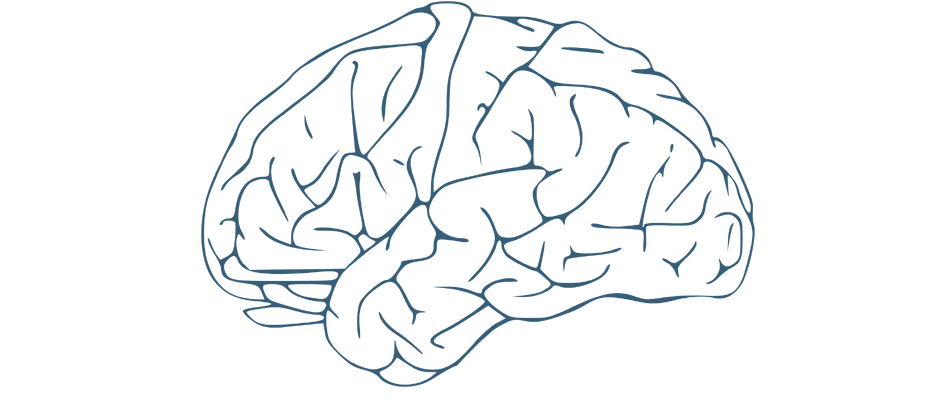
On the differences between introverted and extroverted brains
Brain activity: Introverts often have higher baseline brain activity. This means that they generally experience more internal stimulation and may feel overwhelmed more quickly than extroverts, who often seek external stimulation to feel energised.
Dopamine response: Introverts react differently to dopamine, a chemical in the brain that is released in response to rewards. For introverts, high levels of dopamine can lead to overstimulation, whereas extroverts thrive on it, as their brains are more ‘reward-seeking’.
Parasympathetic nervous system: Introverts tend to be more actively governed by the parasympathetic nervous system, which is associated with relaxation and recovery. Extroverts are more governed by the sympathetic nervous system, which is responsible for action and the ‘fight-or-flight’ response.
Body language and energy expenditure: Introverts often expend more energy on social interactions and may feel drained after prolonged interaction. Their brains are more likely to process information more deeply, which can lead to mental exhaustion setting in more quickly.
Blood flow in the brain: Research shows that introverts have increased blood flow to the frontal cortex, which is responsible for problem-solving, planning and thinking. This means that introverts spend more time reflecting and analysing before acting.
Sensitivity to stimuli: Introverts are often more sensitive to external stimuli, such as noise, light and social interaction, which can cause them to withdraw in order to recharge.
© 2026. All Rights Reserved
Høvevej 49 | 4540 Fårevejle | Denmark | CVR nr. 27531385 | +45 26 18 61 90